


Rewards
Walmart logo
Amazon logo
PayPal logo
Amazon gift card
Take surveys and collect rewards from the industry-leading e-commerce website, Amazon.com, Via "amazon gift cards". The more you take or create survey, larger the amazon gift card you earn.

21 Of The Most Destructive Invasive Insects In America - Part 1 of 10

Published on 12/09/2025
By: luvbugnmama1
1073
Nature
5
An invasive insect is a non-native species that spreads and causes or is likely to cause harm to the environment, economy, or human health. They are a problem because they often arrive without their natural predators or diseases, allowing their populations to grow rapidly and outcompete native species, which disrupts local ecosystems. Examples include the emerald ash borer, soybean aphid, and spotted lanternfly. There is only one question for this series. "Have you ever seen this invasive insect?" A-Z Animals is my source for this series. (Right click or tap and hold to view images in a new tab.)
1. The box tree moth is an invasive pest that can significantly damage and potentially kill boxwood (Buxus species) plants if left unchecked. The caterpillars are ravenous feeders, and heavy infestations can completely defoliate host plants. After the leaves are gone, they feed on the bark which eventually kills the plant. Originally from East Asia, they are now found in New York, Massachusetts, Michigan, Ohio, Delaware, and Pennsylvania. Have you ever seen this invasive insect?

The box tree moth is an invasive pest that can significantly damage and potentially kill boxwood (Buxus species) plants if left unchecked. The caterpillars are ravenous feeders, and heavy infestations can completely defoliate host plants. After the leaves are gone, they feed on the bark which eventually kills the plant. Originally from East Asia, they are now found in New York, Massachusetts, Michigan, Ohio, Delaware, and Pennsylvania. Have you ever seen this invasive insect?
2. Yellow-legged hornets feed on a variety of insects, including honeybees. If allowed to establish in the United States, these invasive pests could threaten populations of domestic and feral honey bees – some of which are already endangered – and other native pollinators. Originally from Southeast Asia, they can now be found in Georgia and South Carolina. Have you ever seen this invasive insect?
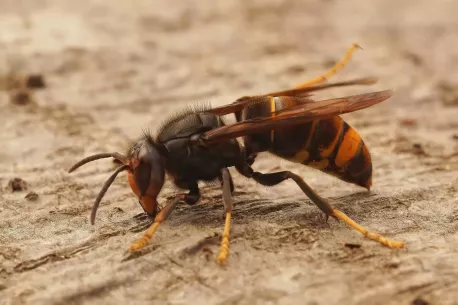
Yellow-legged hornets feed on a variety of insects, including honeybees. If allowed to establish in the United States, these invasive pests could threaten populations of domestic and feral honey bees – some of which are already endangered – and other native pollinators. Originally from Southeast Asia, they can now be found in Georgia and South Carolina. Have you ever seen this invasive insect?
COMMENTS