Results: State Capitalism / Creeping Socialism

The Cato Institute, a conservative think tank, characterized President Trump’s economic environment as state capitalism and a steppingstone toward what they refer to as “creeping socialism.” Cato’s Aug. 28, 2025 report notes, “Trump’s state capitalism – a hybrid between socialism and capitalism – won’t make America great again.” "Trump’s State Capitalism Marks a Radical Break in U.S. Policy" in The Fulcrum is the source for this two-part survey series.

1.
1.
In the first 17 months of President Trump's second term, he has overseen the U.S. government using taxpayer money to purchase equity stakes in 14 private and 14 publicly held companies. Over the USA's 250 years, this is—by far—the most significant change in American economic policymaking. The practice of the U.S. government owning stakes in firms has raised concerns about the executive branch trying to "pick winners." Additionally, it creates a conflict of interest between the government's role as a regulator and a shareholder and the politicization of corporate decision-making. Before this survey, were you aware of President Trump's pursuit of state capitalism / creeping socialism?
Yes
26%
•
418 votes
No
27%
•
436 votes
Undecided
12%
•
187 votes
Not Applicable
35%
•
559 votes
2.
2.
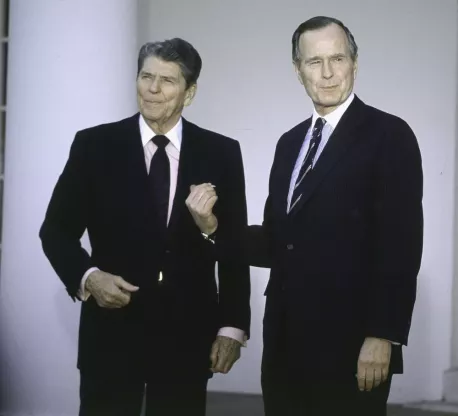
Analyzing whether Trump's economic-related policies signal a shift toward state capitalism or socialism requires comparing his actions to modern-day presidential history and the underlying political dynamics. During the 1980s-2000 period, Presidents Ronald Reagan, George H.W. Bush, and Bill Clinton were highly reluctant to engage in direct ownership of companies. The first of two exceptions occurred in 1987 when America faced technology competition from Japan. To address this issue, the Reagan administration helped fund a public-private research consortium (SEMATECH), and the government did not take any stock ownership. Next, in 1989, the George H.W. Bush administration created the Resolution Trust Corporation to manage and liquidate 747 failed and insolvent savings and loan associations. Were you aware of these US federal government interventions in US companies?
Yes
17%
•
273 votes
No
39%
•
623 votes
Undecided
11%
•
183 votes
Not Applicable
33%
•
521 votes
3.
3.
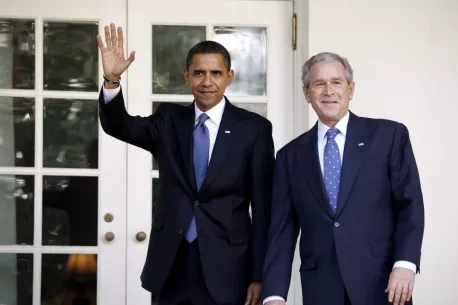
During the 2008 financial crisis, the George W. Bush and Barack Obama administrations used the Troubled Asset Relief Program (TARP) to take equity stakes in major banks, automakers, and insurance companies. This was structured explicitly as a temporary bailout, with liquidation as soon as the respective markets stabilized. Did you approve of these actions?
Yes
18%
•
290 votes
No
21%
•
340 votes
Undecided
21%
•
337 votes
Not Applicable
40%
•
633 votes
4.
4.
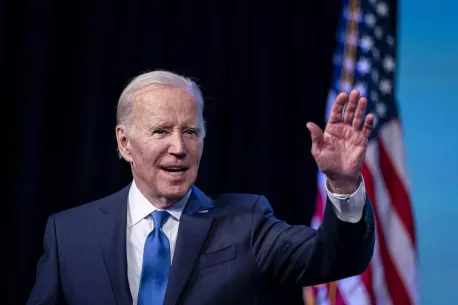
There was bipartisan congressional support for the Joe Biden administration to invoke the CHIPS and Science Act and the Inflation Reduction Act, which gave subsidies to semiconductor and green energy manufacturers. The funds were structured as grants, tax credits, and loans versus direct stock ownership. Did you support these two laws?
Yes
23%
•
369 votes
No
20%
•
314 votes
Undecided
17%
•
267 votes
Not Applicable
41%
•
650 votes

Comments