Results: World Heritage Sites in the United States, part two

"The United Nations Educational, Scientific and Cultural Organization (UNESCO) World Heritage Sites are places of importance to cultural or natural heritage as described in the UNESCO World Heritage Convention, established in 1972.There are 26 World Heritage Sites in the United States, with a further 17 on the tentative list." Wikipedia
1.
1.
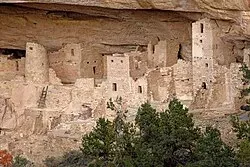
The Mesa Verde National Park is situated on the Mesa Verde plateau that was occupied by the ancient Pueblo peoples between the 6th and 12th centuries. More than 4,000 archaeological sites have been discovered, including cliff dwellings. They range in size from small rooms to complexes containing more than 100 rooms. Notable examples include Cliff Palace (pictured), Balcony House, and Square Tower House. Have you ever been to Mesa Verde National Park?
Yes
12%
•
144 votes
No
75%
•
904 votes
Undecided
13%
•
159 votes
2.
2.
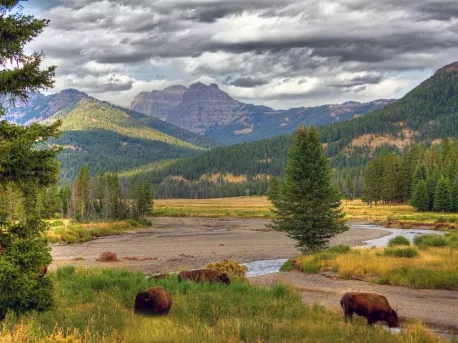
Designated in 1872 as the world's first national park, Yellowstone covers almost 3,500 square miles (9,000 km2). It contains numerous geothermal features including over 300 geysers (more than half in the world), hot springs, mudpots, and fumaroles. The area is rich in fossil deposits with nearly 150 species of plants identified. The park is home to large herds of bison, as well as grizzly bear and gray wolf. The park functions as a model system to understand the processes taking place in the ecosystem. The site was listed as endangered between 1995 and 2003 because of planned mining operations. Do you support commercial operations like mining and logging at national parks like Yellowstone?
Yes
16%
•
188 votes
No
55%
•
667 votes
Undecided
29%
•
352 votes
3.
3.
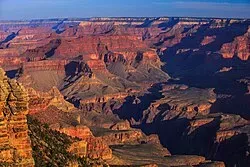
The Grand Canyon is a spectacular gorge that the Colorado River has carved during the last six million years while the Colorado Plateau was uplifted. The canyon is 277 mi (446 km) long and up to 18 mi (29 km) wide. It reaches depths of up to 0.93 mi (1.5 km). The river has cut through geological strata spanning 2 billion years, from Precambrian to the Cenozoic, with the Precambrian and Paleozoic portions particularly well exposed and containing rich fossil assemblages. Due to its diverse topography, the area is home to numerous animal and plant species, from desert riparian to boreal forest communities. Is the Grand Canyon on your travel bucket list?
Yes
23%
•
278 votes
No
36%
•
435 votes
Undecided
15%
•
187 votes
I have already been there.
25%
•
307 votes
4.
4.
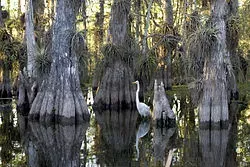
The Everglades National Park comprises vast flat wetlands together with coastal and marine ecosystems. Habitats include tropical hardwood hammocks, mangrove forests, pine rocklands, fresh and saltwater marshes, and seagrass beds. The area is home to the manatee, Florida panther, snail kite, Great egret (Pictured), alligator, and crocodile. The site was placed on the List of World Heritage in Danger from 1993 to 2007 due to sustained hurricane damage and deterioration of water flow and quality due to agricultural and urban development, and again in 2010 due to degradation of the property resulting in a loss of marine habitat and decline in marine species. Do you think that the mosquitos get big in the Everglades?
Yes
50%
•
599 votes
No
17%
•
208 votes
Undecided
33%
•
400 votes
Comments