Results: World Heritage Sites in the United States, part five

"The United Nations Educational, Scientific and Cultural Organization (UNESCO) World Heritage Sites are places of importance to cultural or natural heritage as described in the UNESCO World Heritage Convention, established in 1972.There are 26 World Heritage Sites in the United States, with a further 17 on the tentative list." Wikipedia
1.
1.
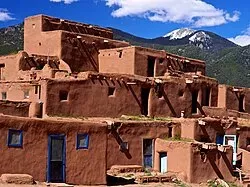
Taos Pueblo is the largest of the Pueblos established along the Rio Grande and its tributaries in the late 13th and early 14th centuries. It has been continuously inhabited since and is an important example of a culture retaining most of its Pre-Columbian traditions. The settlement consists of two multi-story adobe buildings, ceremonial kivas, a Catholic church, and ruins of previous buildings. Have you ever visited Taos Pueblo in New Mexico?
Yes
8%
•
80 votes
No
80%
•
832 votes
Undecided
13%
•
132 votes
2.
2.
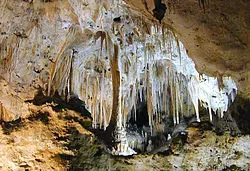
Carlsbad Caverns National Park (California) contains over 100 karst caves, including Carlsbad Caverns (interior pictured) and Lechuguilla Cave. The latter exhibits rare and unique speleothems, including those made of gypsum. Formations also include helictites, calcite structures, and biothems, the formation of which is assisted by bacteria. The caves formed in the Capitan Reef complex during the Permian period, thus allowing researchers to study the ancient reef both from inside and from the exposed parts in the canyon outside. Have you ever visited Carlsbad Caverns National Park?
Yes
14%
•
144 votes
No
75%
•
779 votes
Undecided
12%
•
121 votes
3.
3.
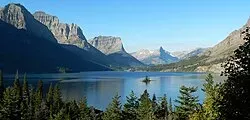
Waterton-Glacier International Peace Park (Alberta and Montana) comprises the Waterton Lakes National Park in Canada and the Glacier National Park in the US. Both parks are known for their outstanding scenic beauty due to mountains and glacial landforms. The park straddles the Continental Divide and includes the Triple Divide Peak. The mountains meet the prairie without intervening foothills, and the geography allowed the animal and plant species typical of Pacific Northwest to spread inland. This resulted in a high number of animal and plant species present in a small area. Saint Mary Lake is pictured. Were you familiar with this international park on the Canada and U.S. border?
Yes
22%
•
226 votes
No
65%
•
681 votes
Undecided
13%
•
137 votes
4.
4.
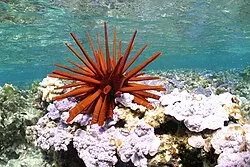
Papahānaumokuākea, one of the world's largest marine protected areas, is located west of the main Hawaiian Islands. It stretches over some 1,200 mi (1,930 km) and covers a number of small islands, atolls, and seamounts, together with the surrounding ocean. They illustrate the progression of the Hawaii hotspot. The terrestrial and marine habitats are home to numerous bird, fish, seal, coral, and plant species, with many of them endemic. The islands are regarded with traditional significance for living Native Hawaiian culture, with archaeological sites on the islands of Nīhoa and Makumanamana dating before the European contact. Heterocentrotus mamillatus, a sea urchin, is pictured. Have you ever heard about this World Heritage Site before?
Yes
11%
•
112 votes
No
76%
•
796 votes
Undecided
13%
•
136 votes
Comments