Results: World Heritage Sites in the United States, part six

"The United Nations Educational, Scientific and Cultural Organization (UNESCO) World Heritage Sites are places of importance to cultural or natural heritage as described in the UNESCO World Heritage Convention, established in 1972.There are 26 World Heritage Sites in the United States, with a further 17 on the tentative list." Wikipedia
1.
1.
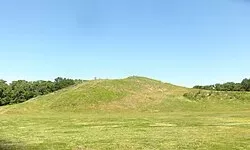
Monumental Earthworks of Poverty Point (Louisiana) is a vast earthen complex at Poverty Point that was constructed between 1700 and 1100 BCE, during the Late Archaic Period. It was created by a foraging society of fishermen-hunter-gatherers, instead of a settled agricultural society. The complex consists of semi-elliptical ridges with a central plaza, and several mounds. It was used for residential and ceremonial purposes. It was also a center of a vast trade network, extending hundreds of kilometers to supply stone and minerals. This level of earthen construction was not surpassed in North America for another 2,000 years. Have you ever heard of Poverty Point before today's survey?
Yes
7%
•
79 votes
No
78%
•
839 votes
Undecided
14%
•
154 votes
2.
2.
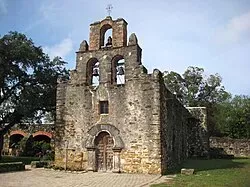
San Antonio Missions (Texas) comprises five frontier mission complexes, constructed in the 18th century by Spanish Franciscan missionaries, as well as a nearby ranch. The missions were built along the San Antonio River in order to spread religion, to colonize the area, and to defend the frontier. They demonstrate the cultural interactions between the Spanish and the Coahuiltecan and other hunter-gatherer groups, who became settled agriculturalists within the time of one generation. The decorative elements in the churches represent a blend of Catholic and indigenous motifs. Mission Espada is pictured. Have you ever visited this part of central Texas?
Yes
16%
•
171 votes
No
71%
•
761 votes
Undecided
13%
•
140 votes
3.
3.
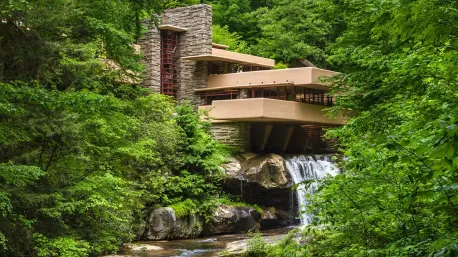
The 20th-Century Architecture of Frank Lloyd Wright comprises eight buildings (Arizona, California, Illinois, New York, Pennsylvania, Wisconsin) designed by architect Frank Lloyd Wright in the first half of the 20th century. Wright developed the concept of "organic architecture", the architecture that responds to the setting and the needs of the users. His style was marked by the novel uses of materials such as steel and concrete. The buildings listed include residential buildings (Fallingwater pictured), a church, and the Solomon R. Guggenheim Museum. Wright's work influenced architects worldwide. Have you ever been to one of Frank Lloyd Wright's famous buildings?
Yes
17%
•
181 votes
No
68%
•
731 votes
Undecided
15%
•
160 votes
4.
4.
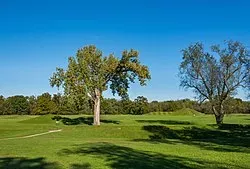
Hopewell Ceremonial Earthworks (Ohio) comprises a series of features of the Hopewell culture from the Woodland period of the first millennium CE. They constructed large-scale ceremonial earthworks, such as mounds and walls in geometric designs. Fort Ancient is an example of a hilltop fort. Hopewell Culture National Historical Park comprises five sites (Mound City with more than 30 mounds pictured) with walls in shapes of squares and circles. The Newark Earthworks contain some large enclosures. Excavations at the sites uncovered several finely crafted objects from materials that were obtained by travel to areas as far as the Yellowstone basin. Have you ever seen any of these historic earthen mounds?
Yes
11%
•
116 votes
No
75%
•
809 votes
Undecided
14%
•
147 votes
Comments