Results: World Heritage Sites in the United States, part seven

"The United Nations Educational, Scientific and Cultural Organization (UNESCO) World Heritage Sites are places of importance to cultural or natural heritage as described in the UNESCO World Heritage Convention, established in 1972.There are 26 World Heritage Sites in the United States, with a further 17 on the tentative list." Wikipedia
1.
1.
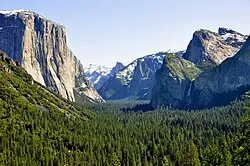
Yosemite National Park (California) is located in the Sierra Nevada mountains. During the Quaternary glaciation, the glaciers created unique landscape features in the granite bedrock, such as valleys, cliffs, domes, moraines, and waterfalls. There are mountain meadows and Giant Sequoia groves. Picture shows the Tunnel View of the Yosemite Valley, with the landforms Half Dome and El Capitan visible. If you haven't already, would you like to visit Yosemite?
Yes
55%
•
603 votes
No
24%
•
266 votes
Undecided
21%
•
237 votes
2.
2.
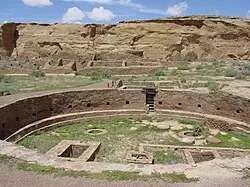
Chaco Canyon (New Mexico) was a major center of the Ancestral Puebloans and was occupied between 850 and 1250, with the peak between about 1020 and 1110. Living in a harsh environment, the highly organized society constructed monumental structures, "great houses", that had residential, storage, and ceremonial functions. Based on the size, it was likely a regional center of the Four Corners area. The great kiva at Chetro Ketl is pictured. The World Heritage Site also includes the ruins at the Aztec Ruins National Monument and some smaller sites. Before today's survey, were you aware of the Chaco culture?
Yes
18%
•
203 votes
No
65%
•
718 votes
Undecided
17%
•
185 votes
3.
3.
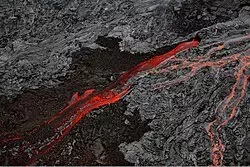
Hawaii Volcanoes National Park on the island of Hawaii is home to Kīlauea and Mauna Loa, two of the most active and among the best studied volcanoes in the world. Mauna Loa reaches 13,680 ft (4,170 m) above the sea level, but measured from the ocean floor, it is the world's greatest volcanic mass. The landscape of the park is being constantly shaped and changed by the frequent volcanic eruptions. The park is home to rare bird species and a forest of giant ferns. A lava flow is pictured. Have you ever visited the 'Big Island'?
Yes
17%
•
188 votes
No
70%
•
775 votes
Undecided
13%
•
143 votes
4.
4.
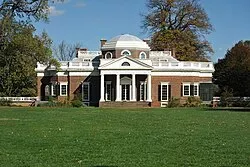
Monticello and the University of Virginia in Charlottesville is the last World Heritage Site we will be exploring today. Monticello (built between 1769 and 1809, pictured) was designed by Thomas Jefferson, third President of the United States and author of the Declaration of Independence, as his plantation home. Jefferson also designed (1817–26) the early buildings that made up the University of Virginia in Charlottesville, based on his idea of an ideal "academical village". The Rotunda is modeled after the Pantheon in Rome. The buildings are prominent examples of neoclassical architecture. Did you realize that Monticello and the early buildings of the University of Virginia in Charlottesville were designed by Thomas Jefferson?
Yes
30%
•
334 votes
No
54%
•
593 votes
Undecided
16%
•
179 votes
Comments