Results: *** Exploring Amazing Innovations in Medical Research *** Core Innovations in 3D Surgical Technology

3D imaging in surgical innovations transforms how doctors visualize and navigate complex anatomy. By converting 2D scans into interactive 3D holograms or high-resolution displays, surgeons can precisely map tumors, plan operations virtually, and use augmented reality (AR) for intraoperative guidance, leading to shorter surgeries, faster recovery times, and improved precision
1.
1.
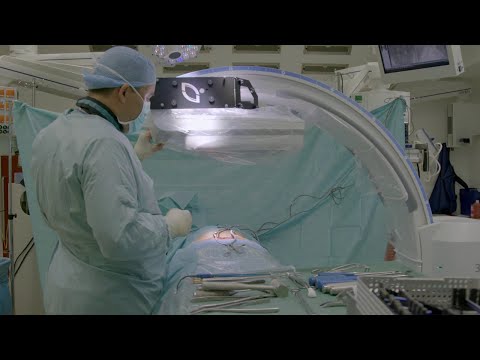
Moncton teen becomes first patient of improved imaging technology in Canada. Molly Johnston, 14, is now recovering from spinal surgery that will help treat her scoliosis. She received care at the IWK Health Centre in Halifax, and in the process, became the first patient in Canada to undergo surgery that used an improved 3D-imaging machine, according to a May 20 2026 news release from the children's hospital. Were you aware that 3D Imagining can guide Surgeons to precise and accurate surgical steps and get positive results?
Yes
37%
•
595 votes
No
31%
•
498 votes
Undecided
14%
•
221 votes
Not Applicable
18%
•
286 votes
2.
2.
Using 3D printed and digital models for brain surgeryMayo Clinic utilizes state-of-the-art 3D-printed and digital models (often called "digital twins") created directly from patient MRI and CT scans to plan and simulate complex brain surgeries. This technology allows neurosurgeons to customize procedures, resulting in higher surgical precision, less pain, and faster patient recoveries. Eliminating Mental Gymnastics: Instead of surgeons trying to piece together thousands of 2D CT or MRI images in their minds, Mayo Clinic's Anatomic Modeling Laboratories manufacture life-size, personalized 3D replicas of a patient's skull, brain, and surrounding blood vessels. Replicating Human Tissue: The lab casts these models with advanced plastics and materials that perfectly mimic human tissues and blood vessels. This enables surgeons to physically hold and study the exact shape of a tumor or aneurysm before making a single incision. Practicing the Procedure: Surgeons can take these 3D models into a simulation room and practice the exact surgical steps—such as inserting catheters or safely navigating around a tumor—just as they would on the patient. Custom Device Fitting: The ability to physically interact with the model allows teams to test and mold custom tools or implants required for intricate cranial or spinal work. Were you aware that 3D Printing allows surgeons to practice difficult surgeries before they proceed?
Yes
28%
•
455 votes
No
40%
•
641 votes
Undecided
13%
•
213 votes
Not Applicable
18%
•
291 votes
3.
3.
For trauma surgeons, it's crucial to directly know if screws or implants are positioned correctly. The BG Trauma Center Ludwigshafen uses 3D imaging to directly check surgery results. The benefit? Less revisions for their patients. Does your local hospital have these options?
Yes
12%
•
189 votes
No
19%
•
299 votes
Undecided
48%
•
768 votes
Not Applicable
22%
•
344 votes
4.
4.
A surgeon who surfs: How passion for the ocean drives innovations in the hybrid operating room. Meet Domingos Coiteiro, MD, a surgeon at Hospital da Luz and avid surfer. In this video he shares how surfing and surgery are connected for him and why a multidisciplinary mindset in the hybrid operating room is essential. Watch how Hospital da Luz benefits from a personalized hybrid operating room setting. Were you aware of these innovations for precision and greater accuracy in surgery?
Yes
17%
•
265 votes
No
47%
•
747 votes
Undecided
17%
•
269 votes
Not Applicable
20%
•
319 votes

Comments