Results: *** Exploring Amazing Innovations in Medical Research ***

Tissue Engineering & Implants: Scientists at institutions like the Wyss Institute at Harvard are developing methods to print thick, living tissues with built-in micro-vascular channels to keep cells alive.Clinical Trials & Regulation: Complex printed organs are still in the early research and development phases. It will likely be years or even decades before fully functional, printed vital organs are approved for widespread human transplant
1.
1.
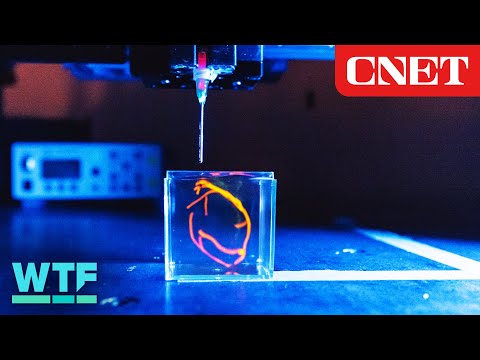
3D-Printing Heart Tissue With Human Stem Cells (Apr 30, 2023) Scientists at Stanford University have developed a method for 3D-printing human heart tissue that could eventually be implanted into patients. Regenerative Bio-engineering: The creation of 3D bioprinted tissues is providing scientists with materials to study how the body works, test new drugs without animal models, and pave the way for artificial organ transplants. Were you aware that they can 3D print living tissues?
Yes
20%
•
324 votes
No
54%
•
862 votes
Undecided
9%
•
149 votes
Not Applicable
17%
•
265 votes
2.
2.
3D printing: The future of organ transplants (Mar 15, 2023) Researchers at MIT have been able to print 3D replicas of the human heart. NBC's Dr. Akshay Syal walks through the process of physically making the organs and what the implications this breakthrough has on the future of transplants. 3D bioprinting uses specialized printers to deposit "bioinks"—a mixture of living cells and supportive hydrogels—layer-by-layer to build functional human tissue. While researchers can print small, simple tissues like cartilage or skin, fully functional, transplantable solid organs are still in development, primarily due to the challenge of creating complex vascular networks. If you needed a transplant would you accept a 3D printed organ?
Yes
27%
•
434 votes
No
14%
•
229 votes
Undecided
42%
•
664 votes
Not Applicable
17%
•
273 votes
3.
3.
The Incredible Science of Bioprinting; Exploring the core concepts of bioprinting - a pioneering technique that uses biological materials to create structures that mimic natural tissues, organs, and even cells. Understand the sophisticated science behind this process, and learn how bio-inks are formulated and layered to build live cells. We'll also embark on a historical journey, tracing the origins and evolution of bioprinting, and how it is reshaping modern medicine. From overcoming organ shortages to paving the way for personalized treatments, bioprinting is revolutionizing healthcare. Were you aware of the advancements in 3D printing of tissues and organs?
Yes
18%
•
282 votes
No
55%
•
880 votes
Undecided
10%
•
167 votes
Not Applicable
17%
•
271 votes

Comments