Results: Megafauna That Once Called North America Home - Part 3 of 7

Extinct megafauna are large animals that have died out, including famous examples like the woolly mammoth, saber-toothed cats, and giant ground sloths, which lived during the Pleistocene epoch. Their extinction, which is largely believed to be as a result of human impact and climate change between 50,000 and 10,000 years ago, caused a major shift in ecosystems worldwide, particularly in Australia and North and South America. This series will explore 15 of these extinct animals that once roamed North America. Live Science is my source for this series.
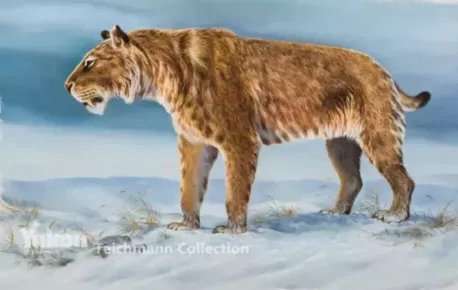
1.
1.
The scimitar-toothed cat (Homotherium) had large canine teeth, powerful forelimbs, a sloping back and a large optic bulb, all of which made it a deadly predator during the Pleistocene, according to a 2020 study in the journal Current Biology. Fossils of the ancient cat have also been found in Eurasia, but during the last ice age, the animal crossed the Bering Land Bridge and started living in North America. Its fossilized remains have been found at the La Brea Tar Pits in Southern California and other parts of the U.S., including Alaska, Idaho and Texas. Have you ever visited the La Brea Tar Pits?
Yes
12%
•
149 votes
No
70%
•
856 votes
Undecided
5%
•
55 votes
Not Applicable
13%
•
162 votes
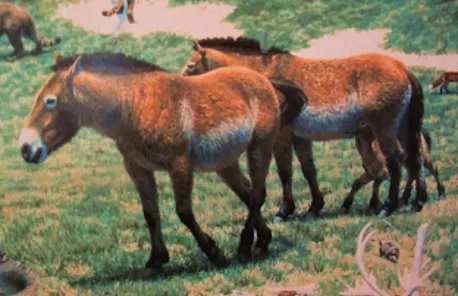
2.
2.
Native North American horses went extinct approximately 10,000 to 12,000 years ago during the Pleistocene-Holocene transition, though recent evidence suggests some may have persisted as recently as 6,000 years ago. These prehistoric, single-toed equids vanished due to a mix of climate change, human hunting, and habitat shifts, before being reintroduced by Spanish explorers in the 15th century. Have you ever ridden a horse?
Yes
62%
•
757 votes
No
22%
•
269 votes
Undecided
4%
•
47 votes
Not Applicable
12%
•
149 votes
Comments