Results: Andean Mountain Cats
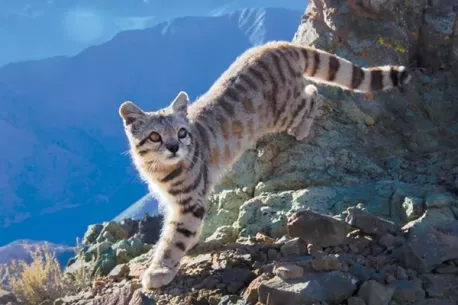
High up in the freezing Andes Mountains, a silent predator walks across the jagged rocks. It lives in a world of ice and thin air.
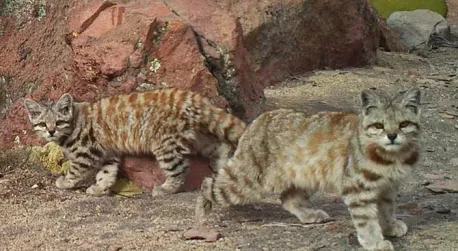
This is the Andean mountain cat, the rarest wild feline in the Americas. Only a tiny handful of people have ever seen it in real life. "The secret wildcat hiding in cold mountain peaks":
story by Adam Harris is the source for this survey.
1.
1.
Andean cats survive at altitudes of up to fifteen thousand feet, where trees cannot grow. This extreme environment features freezing temperatures and savage winds that would kill most normal animals. Their thick, plush grey fur keeps their bodies insulated against the brutal cold. According to the Andean Cat Alliance, fewer than two thousand of these felines remain in the wild. Before today's survey, have you ever heard about these rare felines?
Yes
11%
•
120 votes
No
72%
•
754 votes
Undecided
17%
•
176 votes
2.
2.
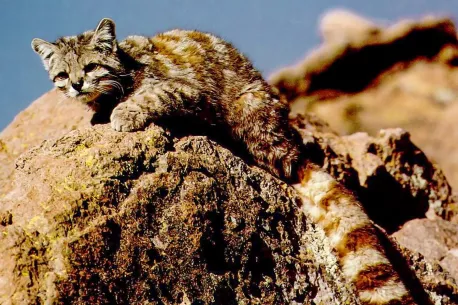
Andean cats rely almost entirely on mountain chinchillas, which are incredibly fast rodents that leap across rocky crevices. The feline must use extreme stealth and explosive speed to catch these agile targets. Their long, ringed tails act like a balancing pole during high-stakes chases. But their physical traits hold another major evolutionary secret. An Andean cat tail can make up sixty percent of its entire body length. This fluffy organ does not just help them balance during steep mountain jumps. It also serves as a warm scarf that they wrap around their face and paws while sleeping in frozen caves. Does it make sense to you that their natural biological blanket is crucial for survival during sub-zero nights?
Yes
66%
•
694 votes
No
15%
•
159 votes
Undecided
19%
•
197 votes
3.
3.
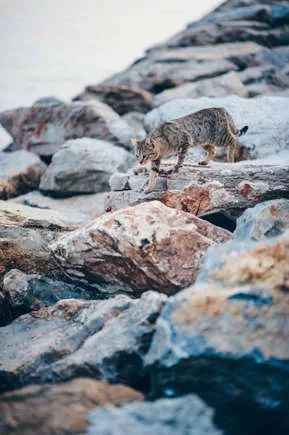
Because these cats blend in perfectly with grey rocks, researchers must rely on automated camera traps. These motion-activated sensors are placed near steep cliffs and rocky paths. Scientists can wait for six months just to capture a single blurry photograph of a passing animal. Each clear image provides vital clues about their territory and daily habits. Are you hardy enough to assist with these trail cameras?
Yes
11%
•
111 votes
No
65%
•
686 votes
Undecided
24%
•
253 votes
4.
4.
Open-pit mining and new mountain roads are rapidly dividing the cat territory. This fragmentation prevents the isolated felines from finding mates and keeping their gene pool healthy. Feline geneticists warn that small, disconnected populations face a very high risk of local extinction. Conservation teams are racing to build protected corridors between these rugged peaks. Do you understand that educating high altitude communities is the most effective way to secure a future for these beautiful wild cats?
Yes
60%
•
634 votes
No
14%
•
148 votes
Undecided
26%
•
268 votes
Comments