Results: Get The Lead Out!
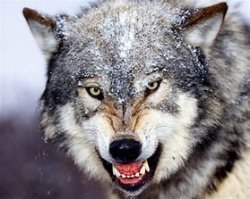
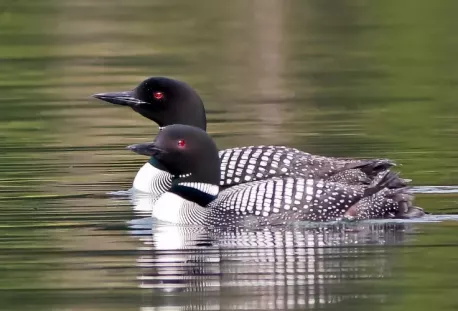
Loons (North American English) or divers (British / Irish English) are a group of aquatic birds found in much of North America and northern Eurasia. All living species of loons are members of the genus Gavia, family Gaviidae, and order Gaviiformes. Mother Jones and Wikipedia are the sources for this survey.
1.
1.
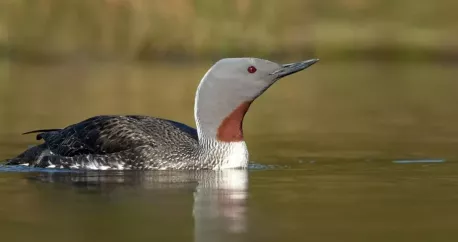
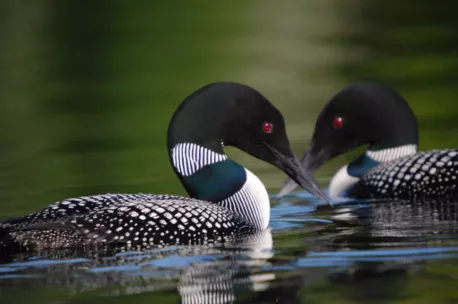
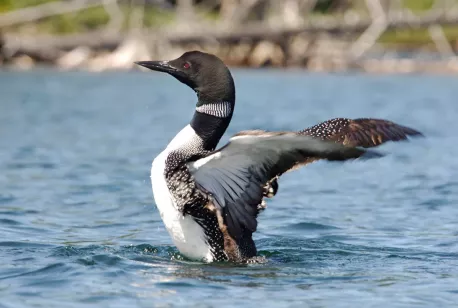
Loons, which are the size of large ducks or small geese, resemble these birds in shape when swimming. Like ducks and geese, but unlike coots (which are Rallidae) and grebes (Podicipedidae), the loon's toes are connected by webbing. The loons may be confused with the cormorants (Phalacrocoracidae) but can be distinguished from them by their distinct call. Have you ever heard a loon call?
Yes
37%
•
361 votes
No
37%
•
355 votes
Undecided
26%
•
247 votes
2.
2.
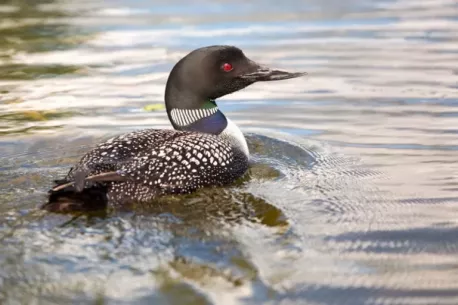
In 1987, wildlife veterinarian Mark Pokras was in his office at Tufts University in Massachusetts when a colleague from New Hampshire called. "I've got a dead loon here," she said. "If I bring it down to you, can you tell me how it died?" Understanding what's killing wild animals is often the first step to saving them, and over the course of his career, Pokras has necropsied everything from whales to hummingbirds. Yet this was his first loon—in part because common loons (Gavia immer) had only recently begun repopulating New England after being nearly eradicated by 300 years of hunting, pollution, and habitat loss. Are you concerned about habitat loss for wild animals where you live?
Yes
51%
•
489 votes
No
25%
•
245 votes
Undecided
24%
•
229 votes
3.
3.
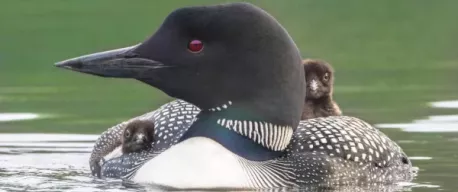
By the early 1900s, common loons—which winter on the coast and spend summers nesting along inland lakes—had disappeared from their breeding grounds in Massachusetts and much of New Hampshire, and been reduced to a fraction of their former abundance elsewhere in New England. Places with names like Loon Pond didn't see nesting loons for more than a century. With the banning of DDT and the passage of the US Clean Water Act in the 1970s, however, loons began returning to the region, and people came to see them as symbols of a recovering wildness. Do you think it is important for humans to learn to cohabitate with wild flora and fauna?
Yes
65%
•
626 votes
No
11%
•
109 votes
Undecided
24%
•
228 votes
4.
4.
Pokras became enchanted by loons while volunteering to rescue seabirds after a series of oil spills in New Jersey, and when his colleague asked if he'd necropsy a dead loon on that otherwise ordinary day in 1987, he readily agreed. Cutting into the bird, Pokras discovered that it had suffered from lead toxicosis, more commonly known as lead poisoning. In Pokras's X-ray, a fishing sinker showed up as an unnaturally round ball amid a mess of partially digested fish and shellfish. After the bird ate it, the lead would have leached toxicants into the bloodstream, causing impaired vision, gastrointestinal distress, neurologic issues, and ultimately death. Did you know that the lead in bullets, fishing lures and sinkers caused lead poisoning in wild animals?
Yes
37%
•
353 votes
No
41%
•
394 votes
Undecided
22%
•
216 votes
5.
5.
Today, Pokras and his colleagues have necropsied nearly 5,000 dead loons, mostly from New England. Other scientists and veterinarians have necropsied more from across the species' breeding range, which extends across most of Canada and the northern United States. In nearly every place—from the Maritimes to Minnesota to Washington State—lead poisoning is the leading cause of death for adult loons in freshwater habitat. A loon that ingests a single 28 gram (1 ounce) lead sinker left behind by a fisherman will likely die in two to four weeks. Do you admire people who commit their lives to studying and finding solutions to save wildlife?
Yes
64%
•
614 votes
No
12%
•
118 votes
Undecided
24%
•
231 votes
6.
6.
In an era when many species are declining because of multipronged, seemingly intractable problems, the solution to protecting loons is relatively straightforward. Anglers simply need to swap their old lead jigs and sinkers for tackle made from tungsten, steel, tin, or bismuth. Do you think that lead should be banned from all fishing tackle to conserve loons and other wildlife in the US and Canada?
Yes
60%
•
576 votes
No
13%
•
127 votes
Undecided
27%
•
260 votes

Comments