Results: Electroreceptive Fish

1.
1.
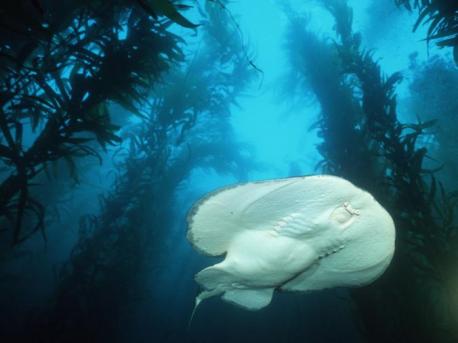
(Source: National Geographic) The electric ray, and other fish, have the biological ability to perceive natural electrical stimuli. Pacific Torpedo Ray An electric ray, also called a Pacific torpedo, prowls a kelp forest off the western coast of North America. These large flattened rays often lie partially buried on sandy seafloors, where they use a specialized sensory system to detect the electrical stimuli of potential prey and then attack them by ambush. The predator wraps its body around a halibut or mackerel and uses special kidney-shaped organs to produce a stunning electric charge of up to 50 volts. Have you ever been able to watch how they ambush their prey?
Yes
10%
•
212 votes
No
104%
•
2229 votes
2.
2.
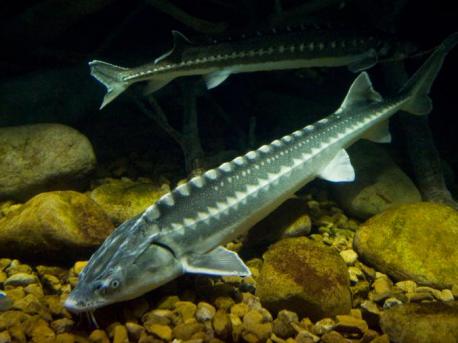
Stellate Sturgeon Stellate or "starry" sturgeons live in salt water but return to freshwater rivers to breed. These ancient fish are now extinct in the Aegean Sea, and the surviving Black and Caspian Sea populations are being decimated by fishing, much of it illegal. Despite stocking efforts, the IUCN estimates that the number of stellate sturgeons has plunged at least 80 percent in the past 30 to 40 years and will soon reach zero if demand for their celebrated caviar doesn't ease. Sturgeons, like their relatives the paddlefish, are among the relatively few fish species to employ electroreceptive abilities. Did you ever eat caviar?
Yes
25%
•
535 votes
No
89%
•
1906 votes
3.
3.
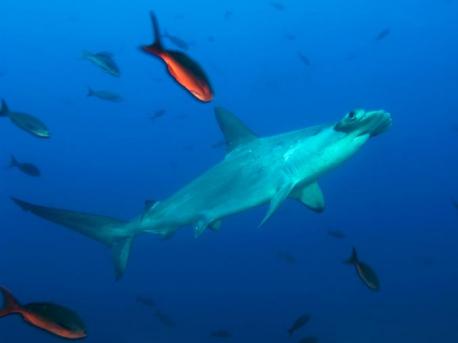
Scalloped Hammerhead Shark Hammerhead sharks are consummate predators that use their oddly shaped heads to improve their ability to find prey. Their wide-set eyes give them a better visual range than most other sharks. And by spreading their highly specialized sensory organs over their wide, mallet-shaped head, they can more thoroughly scan the ocean for food. One group of sensory organs is the ampullae of Lorenzini, which allows sharks to detect, among other things, the electrical fields created by prey animals. The hammerhead's increased ampullae sensitivity allows it to find its favorite meal, stingrays, which usually bury themselves under the sand. Some scientists have suggested the sensors also help hammerheads navigate on their massive migrations by following magnetic field "highways" across the ocean floor. Can you mention any other electroreceptive fish?
Yes
11%
•
236 votes
No
103%
•
2205 votes
4.
4.
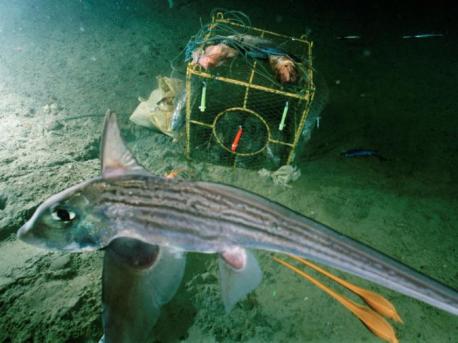
Chimaera Trailing twin egg cases, a chimaera glides through Japan's Suruga Bay. Once released, the yolk-rich cases feed the young for as long a year. This group of fish is distantly related to sharks but difficult to classify—the two lineages split some 400 million years ago. Since that time chimaera have remained in isolation and retained their electroreceptive abilities. Do you know any other fish that takes care or their young for such a long period?
Yes
8%
•
176 votes
No
106%
•
2265 votes

Comments