



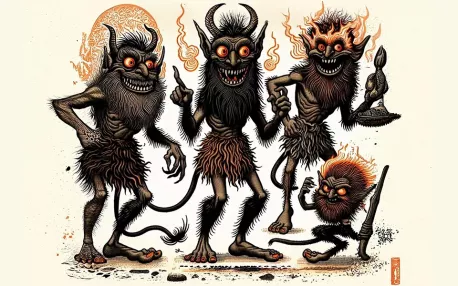
2. Kallikantzaroi are believed to dwell underground spending most of the time trying to saw down the giant tree that supports the earth, but come to the surface during the twelve days of Christmas, from 25 December to 6 January. The Kallikantzaroi are as weird and grotesque as they are fascinating. Imagine small, hunched figures with coarse, hairy skin, goat-like legs, and sharp claws that gleam in the firelight. Their glowing eyes pierce the darkness, and their twisted, animalistic features give them a truly otherworldly appearance. Some tales describe them as lisping and blind, with a penchant for feasting on worms, snails, and other unappetizing creatures. Yet for all their fearsome looks, the Kallikantzaroi are more prankster than predator. They delight in petty mischief. Their favorite activities include souring milk in village homes, extinguishing fires, and spilling ash from hearths across freshly cleaned floors. They are said to slip into houses through chimneys, cracks in walls, or even open windows. Their antics, though frustrating, are rarely harmful, earning them a reputation as impish nuisances rather than malevolent beings. Have you've heard of these creatures?
3. The Yule Cat (Jólakötturinn) is a giant, menacing cat from Icelandic folklore that prowls the countryside at Christmas, eating people (or their food) who haven't received new clothes before Christmas Eve. This legend served a practical purpose: motivating farm workers and children to finish processing wool and making new garments for winter, ensuring they were prepared and rewarded for hard work. Associated with the troll mother Grýla and the Yule Lads, the cat is a symbol of diligence and community survival in harsh winters. Yeah its a big kitty. Have you've heard of this huge catto?

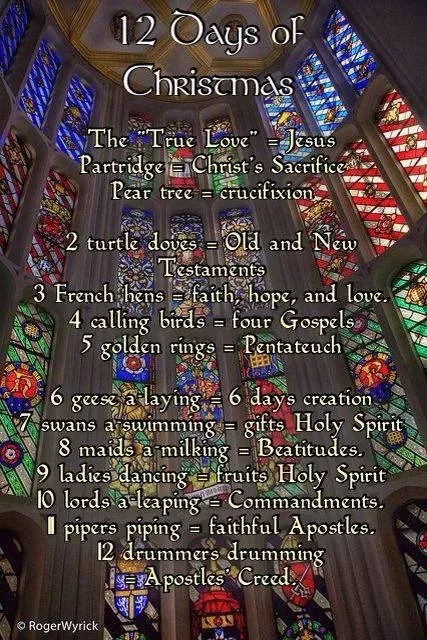
4. The popular claim that "The Twelve Days of Christmas" was a secret Catholic code to teach faith during persecution is a persistent modern legend, lacking historical evidence; while many assign symbolic meanings (like the Partridge for Jesus, Turtle Doves for Testaments), historians say the song originated as a secular memory game in 18th-century England, later adapted with Christian interpretations, but wasn't a covert catechism. The Popular (but Unproven) Theory. Proponents suggest the song was created by English Catholics during the Reformation (16th-17th centuries) to secretly teach their children core Christian beliefs. Alleged Meanings: Partridge in a Pear Tree: Jesus Christ (willing to sacrifice for young). Two Turtle Doves: The Old and New Testaments. Three French Hens: The theological virtues of Faith, Hope, and Love. Four Calling Birds: The Four Gospels (Matthew, Mark, Luke, John) Five Gold Rings: The first five books of the Bible (Torah/Pentateuch). Six Geese a-Laying: The six days of Creation. There's no evidence from the 16th-17th centuries to support this coded meaning. It's an English cumulative folk song, part of a popular parlor game where players had to repeat the increasingly long list of gifts. The Christian interpretations are later additions, likely emerging in the 20th century as people sought deeper spiritual meaning in the familiar song. Have you've heard of this myth?
5. I covered a lot of myths like these a few years ago. I just wanted to do the rest. Happy Holidays!! And from me personally. Merry Gothmas (optional)

COMMENTS